
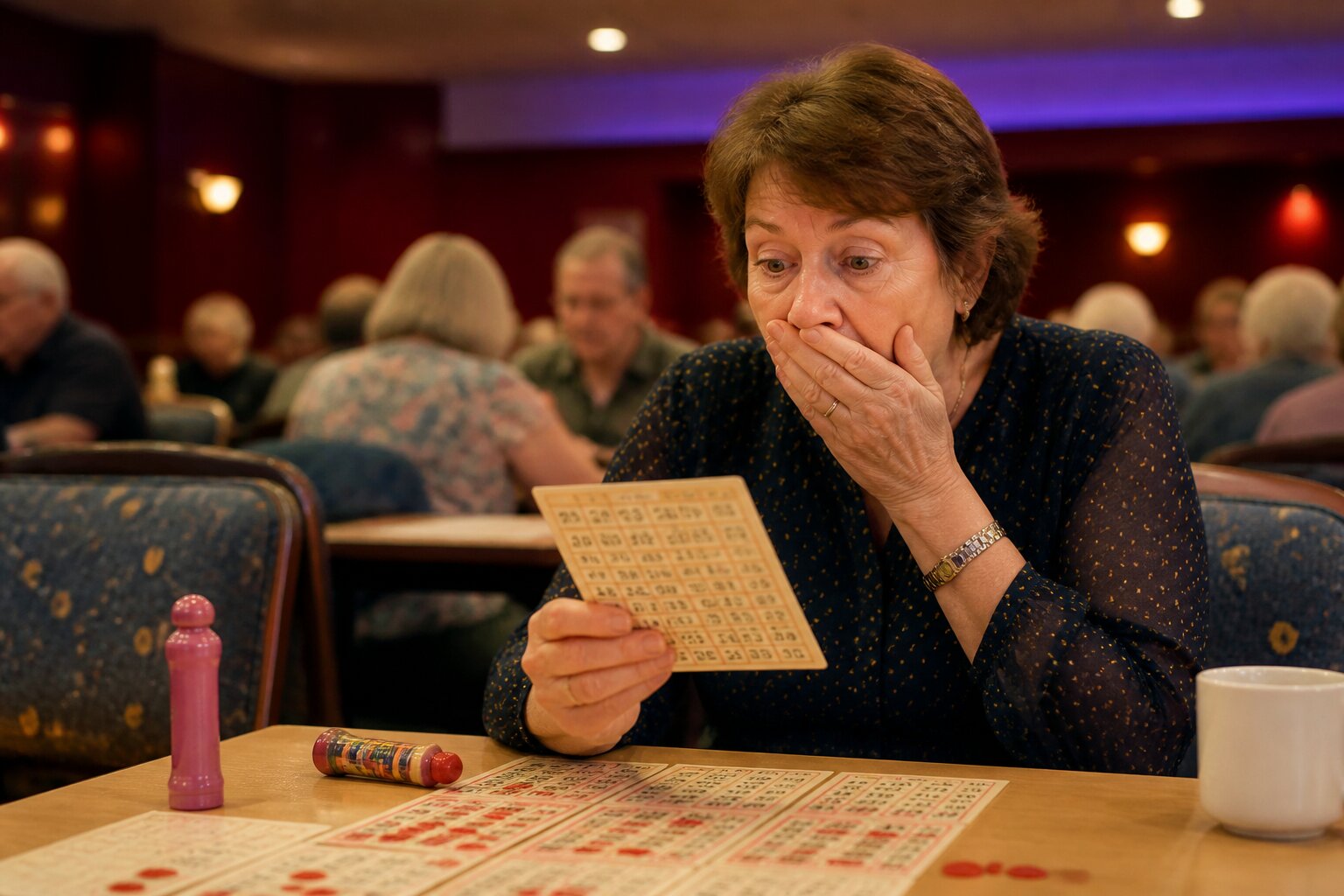
If you’ve ever played online or in a bingo hall, you may have heard someone shout "house" after just 15 numbers. It sounds almost too sudden, doesn’t it?
Stories like that spread quickly, and they’re worth checking: what would a 15-number full house actually mean, and how does it fit with how the game is run? Let’s take a closer look.
Understanding How Bingo Is Played
Bingo is played by marking off numbers on a ticket as they are called. In the UK, the most common format is 90-ball bingo, while some venues and sites also offer 75-ball bingo.
In 90-ball bingo, each ticket has three horizontal rows and nine columns. Each row contains five numbers and four blanks, so each ticket shows 15 numbers in total. Numbers are called at random from a pool of 1 to 90, and prizes are paid for one line, two lines and a full house (all 15 numbers on a ticket). In 75-ball bingo, cards are arranged as a 5 by 5 grid with the centre often treated as a free space; wins come from completing specified patterns or filling the whole card.
Only those aged 18 and over may play in the UK. Next, we’ll consider what a “win in 15 numbers” actually involves so the scale of the claim becomes clear.
What Does It Mean to Win in 15 Numbers?
A win in 15 numbers means a player completes a full house on a single ticket by the time the fifteenth number is called. Because a 90-ball ticket contains exactly 15 numbers, this would require every number printed on that ticket to be among the first 15 drawn.
For example, if a ticket’s numbers are 3, 8, 15, 22, 29, 35, 41, 46, 53, 60, 67, 72, 78, 84 and 90, a 15-number win would occur only if those exact numbers are the first 15 drawn in the game. There is no partial overlap or substitution: every number on the ticket must appear among those first fifteen calls.
That definition underlines how precise the event would need to be; the next section examines the numerical odds that this could occur.
How Likely Is It to Call Bingo in Just 15 Numbers?
A full house in exactly 15 numbers is extremely unlikely. It requires that a specific set of 15 numbers printed on one ticket are the first 15 numbers pulled from a pool of 90, in any order. The draw is random, so no strategy or behaviour by a player can alter that outcome.
This rarity means that a 15-number full house is essentially a statistical fluke. While it is not impossible, the odds are so remote that such an event would be far outside what players would normally expect to see during ordinary play.
Maths Behind 15-Number Wins
The probability can be expressed using combinations. The number of different 15-number sets that can be chosen from 90 is calculated as “90 choose 15.” That equals:
90! / (15! × 75!) = 4,706,160,625 possible combinations
Only one of those combinations would match any given ticket’s 15 numbers, so the chance that a single ticket becomes a full house on the fifteenth call is one in 4,706,160,625. In percentage terms, that is approximately 0.000000021%.
If a player holds multiple tickets, the chance that one of them matches improves proportionally to the number of different combinations they hold, but even with many tickets the overall probability remains vanishingly small. This extremely low probability explains why reports of 15-number wins are treated with scepticism: although mathematically possible, such outcomes lie far outside ordinary experience and expectation in play.
Have There Been Documented Cases of 15-Number Wins?
Across the industry, there are no publicly verified, official records of a full house being claimed exactly on the fifteenth number under regulated conditions. Operators keep records of notable wins and game statistics, and while very quick full houses do sometimes happen, a genuine 15-number full house has not been substantiated in known documentation.
Occasional stories emerge in communities—claims of very rapid wins—but such accounts generally lack corroborating evidence. More commonly documented are wins taking slightly longer, for example in the mid-teens to twenties of calls, which fall within far more plausible statistical ranges.
Understanding how rare a true 15-number win would be helps explain why most reports remain unverified rumours rather than formally recorded events. The next section looks at common myths around these tales and separates them from what the maths and records actually show.
Myth-Busting: Is It Possible or Just a Casino Tale?
The idea that someone frequently wins bingo in 15 numbers has become a lasting story among players, yet the maths and the lack of verified records make it clear why the tale persists as lore rather than fact.
Common misconceptions include claims that rapid wins are routine at large venues or that specific tricks can produce such results. In fact, rapid wins do occur from time to time, but nothing short of the exact match described earlier would qualify as a true 15-number full house, and no legitimate method can make that outcome more likely because number draws are random.
These myths can inflate expectations, so it helps to view bingo as a game with well-understood probabilities and regulated procedures. If ever confronted with an extraordinary claim, look for supporting evidence or official confirmation before accepting it. Remember also to play within personal limits and only where play is permitted for those aged 18 and over.
Bingo’s best appeal is its social and entertaining nature; while astonishing outcomes make for good stories, they are not the norm and should not shape someone’s outlook on play.
Enjoy Slots at Freebet Casino
Fancy exploring something new and entertaining? At Freebet Casino, we welcome you to enjoy a relaxed and friendly gaming experience on our site.
Getting set up is a breeze—just create an account, make your first deposit, and you can dive in at your own pace. We’re here to make your casino journey an enjoyable one.
**The information provided in this blog is intended for educational purposes and should not be construed as betting advice or a guarantee of success. Always gamble responsibly.