
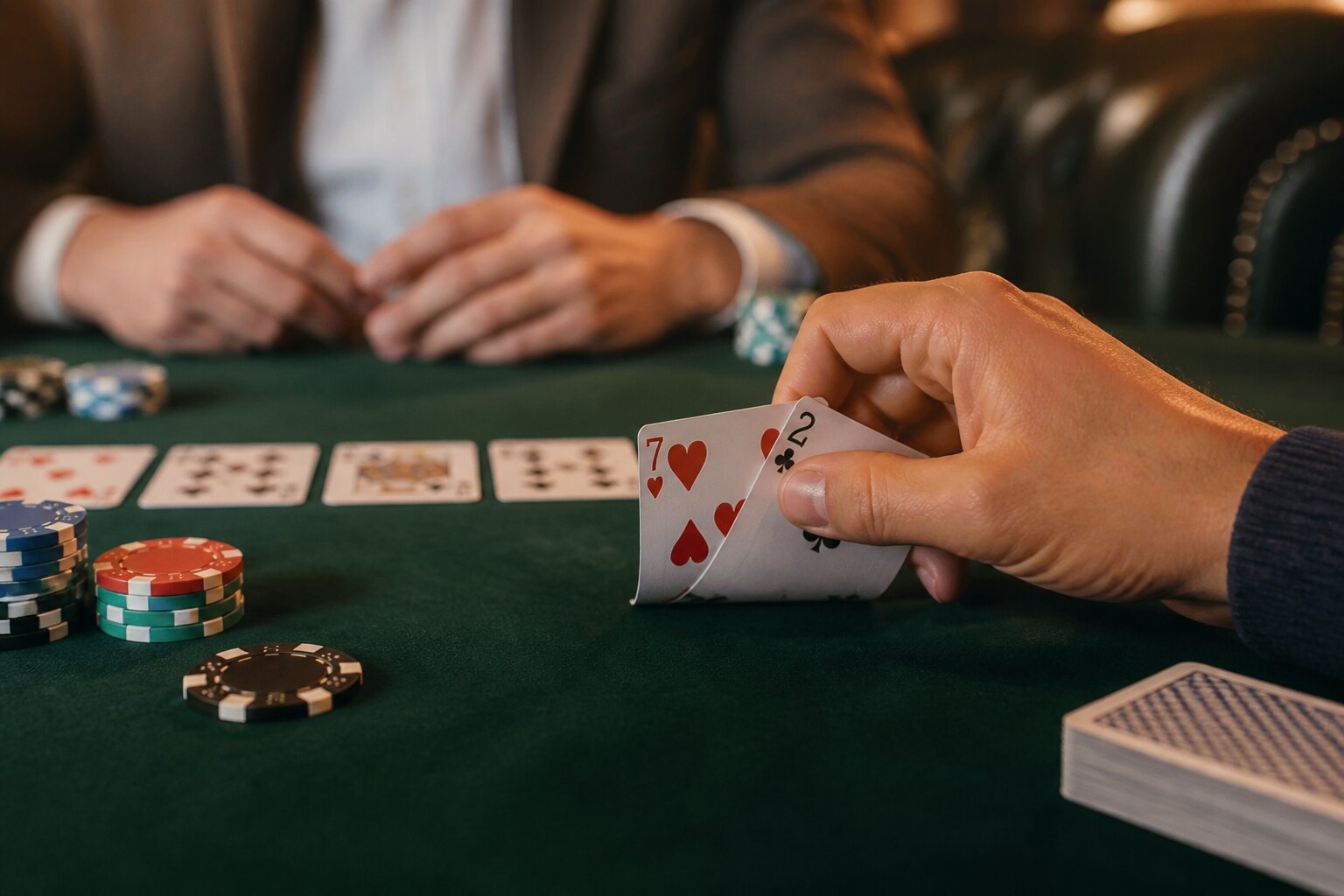
Ever heard someone at the poker table groan about a “brick” and wondered what they meant? You’re not alone. Poker has its own vocabulary, and knowing a few key terms helps you follow the action and understand what other players are thinking.
Understanding words like “brick” won’t magically change your game, but it will keep you from getting lost in conversation and make your reads more accurate. Read on to see how that single card can influence the flow of a hand.
What Does 'Brick' Mean in Poker?
A ‘brick’ is a card dealt on the turn or river that does not improve any likely hands at the table. Players also call it a “blank.” The idea is simple: the card arrives and the board’s main possibilities remain the same.
For example, if the community cards include four hearts and a club appears on the river, that club is a brick for anyone chasing the flush. Similarly, if several players are one card away from a straight and the next card doesn’t fit the sequence, it’s a brick for those draws.
This term is a quick way to describe a card that fails to change the hand’s dynamics, so you’ll hear it used whenever the action stalls because of an unhelpful card.
How Is a Brick Used During Poker Hands?
When a brick lands, it often alters how players decide to bet, check or fold. If the board hasn’t moved closer to completing likely draws, some players tighten up and others press their existing advantage, depending on their holdings and reads.
Bricks also affect bluffing and pot control. A player with a strong made hand might use a brick to extract value by betting, while someone on a draw may fold rather than risk more chips with no improvement. In multiway pots, a brick can simplify the situation by reducing the number of plausible outs for opponents.
Notice how this connects to the definition above: a brick’s main effect is behavioural. It doesn’t add new combinations to the board, but it changes the incentives and information players act on.
Why Are Certain Cards Called Bricks?
Cards earn the “brick” label because they don’t connect with the likely holdings or potential draws already visible. The metaphor comes from the image of a card hitting the table with no spark — it just sits there, irrelevant to the immediate goals of most players.
Imagine a board where two players need a king to pair up and take the pot; a small, unrelated nine on the turn does nothing for that goal, so it’s a brick. Likewise, when most players are chasing a suit, any off-suit card is essentially inert for that primary contest.
The phrase is useful because it captures both the card’s practical effect and the table’s reaction: the action often cools down or shifts when a brick appears.
Common Situations Where Bricks Appear
Bricks are common on the turn and river when specific draws remain unfulfilled. Typical situations include:
- A missed straight: the board shows a promising sequence but the next card sits outside that run.
- A missed flush: several cards of the same suit are present, but the new card is of a different suit.
- No pair improvement: players holding single pairs hoping to improve are left unchanged by an unrelated card.
Even when a card is a brick for most players, it can still matter in marginal cases — for instance, if someone holds an unusual two-card combination that suddenly interacts with the new card. So while bricks often simplify the action, they don’t render every decision trivial.
Is 'Brick' Used Differently in Live and Online Poker?
The meaning of “brick” is the same whether you play in a casino or on-screen, but the surrounding behaviour changes. In live games you can read body language, timing and subtle table talk after a brick appears. Online, those cues disappear and players rely more on bet sizing, timing patterns and chat messages.
Because online play lacks physical tells, the reaction to a brick may be less obvious but still visible through action. Conversely, a live table might erupt with audible sighs or enthusiastic calls when a brick lands — those reactions shape the psychological layer of the game.
Either way, the term remains a concise way to describe a card that leaves the core possibilities intact.
Misconceptions About Bricks in Poker
A frequent misunderstanding is to assume a brick makes the hand uninteresting or predetermined. While a brick removes some potential outcomes, the final result still depends on players’ private cards, betting choices and reads. Bricks simplify the board but not the human element.
Another myth is that recognising a brick gives a decisive edge. Identifying a brick helps frame decisions, but it doesn’t replace hand reading, position awareness or understanding opponents’ tendencies. In other words, calling a card a brick is one piece of the puzzle, not the whole picture.
These clarifications help you avoid overvaluing the label and encourage you to combine it with other information at the table.
Key Takeaways on Poker Bricks
Here are the main points to keep in mind about bricks, presented clearly so you can refer back without rehashing earlier explanations.
What is a Brick?
A brick is a turn or river card that does not affect the leading hands or likely draws on the board.
Where and When Do They Appear?
They frequently show up on the turn and river, especially when players are waiting to complete straights, flushes or pair improvements.
Does It Matter Where You Play?
The meaning is identical in live and online play; the difference lies in how players express their reactions and how much extra information you can gather from those reactions.
Myths Cleared Up
Calling a card a brick describes its impact on the board, but it does not predict the final outcome of the hand.
Remember that poker combines skillful decision-making with an uncertain card sequence. Play responsibly and within your limits; if gambling becomes a problem, seek support.
**The information provided in this blog is intended for educational purposes and should not be construed as betting advice or a guarantee of success. Always gamble responsibly.