
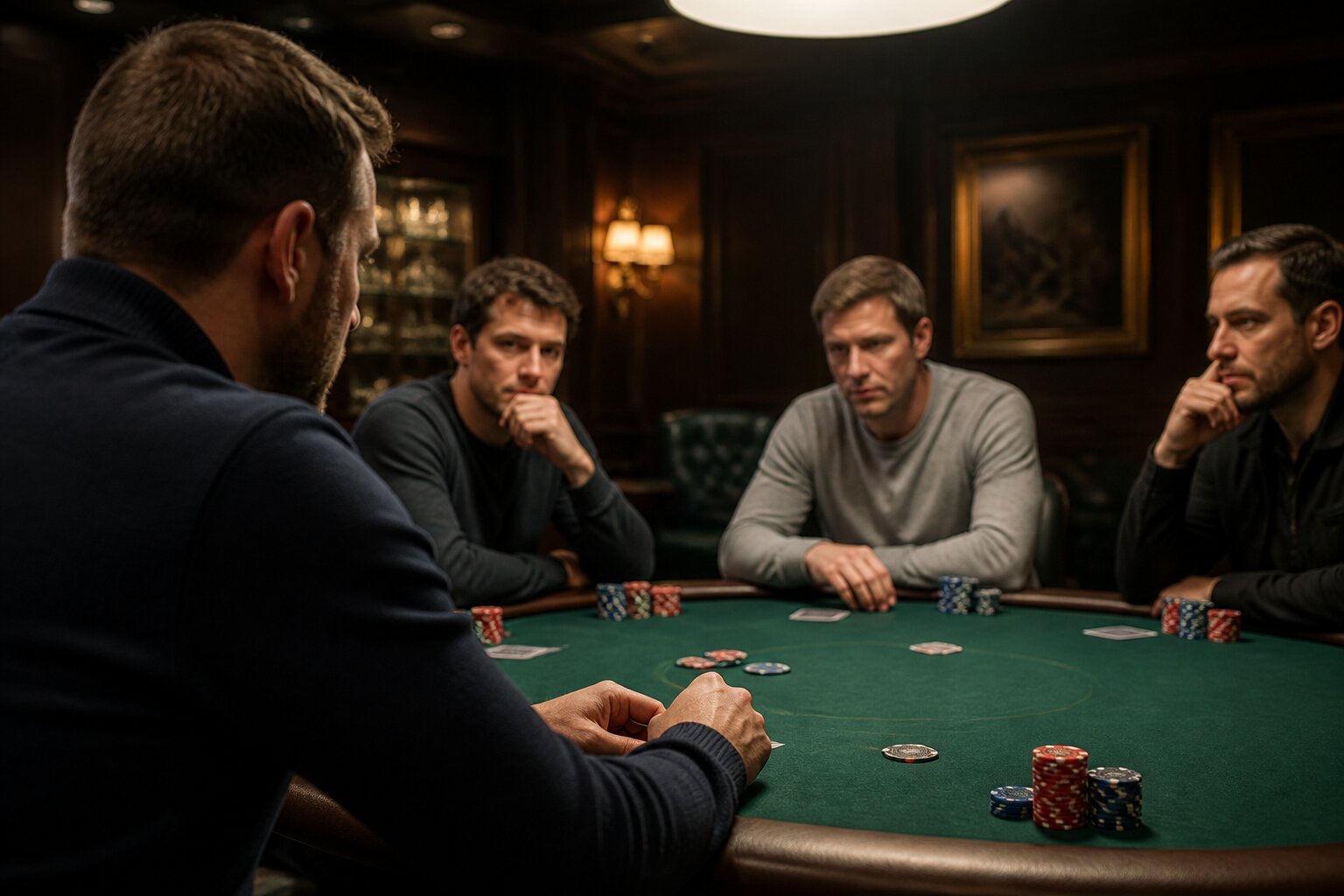
Ever wondered what being “under the gun” really means when you’re playing poker? You’re not alone — this is a pivotal spot at any table, and getting it right can change how you approach every hand.
This guide strips away the jargon and shows what the UTG position is, why it matters and how it influences your choices. Read on to sharpen your decision-making from the very first action in a hand.
Keep going and you’ll move from uncertainty to a clear view of the options that work best from this seat.
What Does 'Under the Gun' Mean in Poker?
The term ‘under the gun’ (UTG) refers to the player sitting immediately to the left of the big blind in Texas Hold’em or Omaha. That player is the first to act in the pre-flop betting round and therefore sets the tone for the hand before anyone else has acted.
Acting first brings a particular kind of pressure: you must commit to check, fold, call or raise without the visual cue of other players’ intentions. That constraint shapes which starting hands are sensible to play and often pushes UTG players toward more cautious opening ranges.
Think of UTG as a position that demands respect for the information gap it creates. Playing from here is less about following a fixed recipe and more about choosing hands and bet sizes that fit the table and the stage of the tournament or cash game.
Understanding Table Dynamics in Poker
Table dynamics describes how players’ tendencies and positions interact to influence each hand. Where you sit alters how you process information: early seats act with less knowledge, later seats can respond to previous actions. That difference is central to how hands unfold.
For example, a passive table where players rarely raise will reward a slightly wider opening range from UTG, because bets are more likely to take the pot uncontested. Conversely, an aggressive table full of frequent raisers makes UTG more vulnerable; strong hands become more valuable and speculative hands less so.
Reading dynamics also means watching patterns. Who three-bets often? Who folds to continuation bets? Those observations let you tailor your approach from any position, and especially from UTG where the margin for error is smaller.
How Does Under the Gun Impact Your Gameplay?
Sitting UTG changes the way you evaluate hands and manage risk. Being first to act means you need hands that can withstand a range of responses from callers and raisers, or hands that play well post-flop in multiway pots.
From UTG, high-connected pairs and premium broadway cards carry more weight because they perform well against multiple opponents. Suited connectors and small pairs lose value unless the table is unusually passive. Equally important is bet sizing: opening too small invites pressure; opening too large can lead to unnecessary losses when facing callers.
This position rewards disciplined selection and a plan for the whole hand — not just the opening action. Knowing which holdings to open, which to fold, and when to adjust based on the table will keep you out of trouble and increase the hands that profit.
Key Terms Associated with Under the Gun
Below are concise definitions to keep the main concepts clear while you read on.
- UTG (Under the Gun): The player immediately to the left of the big blind, who acts first in the pre-flop betting round.
- Early Position: Seats near the UTG spot; these players act before most others.
- Starting Hand: The two hole cards dealt to a player before community cards appear.
- Tight Play: A cautious approach where only stronger hands are played.
These terms give you a shared shorthand for the ideas discussed in the rest of the article.
Common Misconceptions About Under the Gun
One frequent mistake is treating UTG as an automatic disadvantage. While acting early limits information, skilled play and proper hand selection can make the position perfectly playable — it simply requires different priorities.
Another misconception is that only the very strongest hands should be opened from UTG. That’s too rigid; factors such as stack sizes, opponents’ tendencies and the stage of the game affect whether slightly looser hands can be profitable. Adaptation is the key difference between a mechanical approach and a nuanced one.
Some players think aggression from UTG will always force folds. In practice, opponents will call and re-raise based on their own reads, so aggression must be backed by hands and a read on the table. Similarly, experienced players do not always win from this seat; variance in outcomes means good decisions over time are the real target.
Why Does Table Position Matter in Poker?
Position affects the sequence of information you receive and therefore how you plan a hand. Players who act later can respond to earlier moves, shape the pot size and exploit revealed intentions. Early positions lack that reactive benefit and must weigh options with less context.
Good positional awareness leads to better decisions about ranges, bet sizing and when to apply pressure. It also influences psychological dynamics: players in late position can leverage folding tendencies and pot control to their advantage.
Paying attention to position helps you manage your chip stack and improve long-term results. It’s not a guarantee of success, but it does provide a consistent framework for stronger, more deliberate choices at the table.
Glossary of Useful Poker Position Terms
These short definitions round out the vocabulary used above and help you follow strategy discussions more easily.
Under the Gun (UTG)
The player seated directly to the left of the big blind, acting first in the pre-flop round.
Early Position
Seats closest to the left of the big blind, including the UTG spot; these players act before most of the table.
Middle Position
Seats between early and late positions; these players act after early position but before late position.
Late Position
Includes the dealer button and cutoff; players here act towards the end of the betting round and can base choices on most earlier actions.
The Blinds
The two seats to the left of the dealer post the small blind and big blind, forced bets that create an initial pot and encourage action.
Knowing this terminology helps you communicate at the table and apply the strategies described earlier with confidence. Keep observing how different positions play out in real games and adjust your approach as you gain experience.
If you want to put these ideas into practice, consider reviewing your hand history from UTG spots to spot recurring patterns and improvement opportunities; small adjustments in starting-hand choices and bet sizing often yield noticeable benefits. Remember to play responsibly and within your means as you refine your game.
**The information provided in this blog is intended for educational purposes and should not be construed as betting advice or a guarantee of success. Always gamble responsibly.