
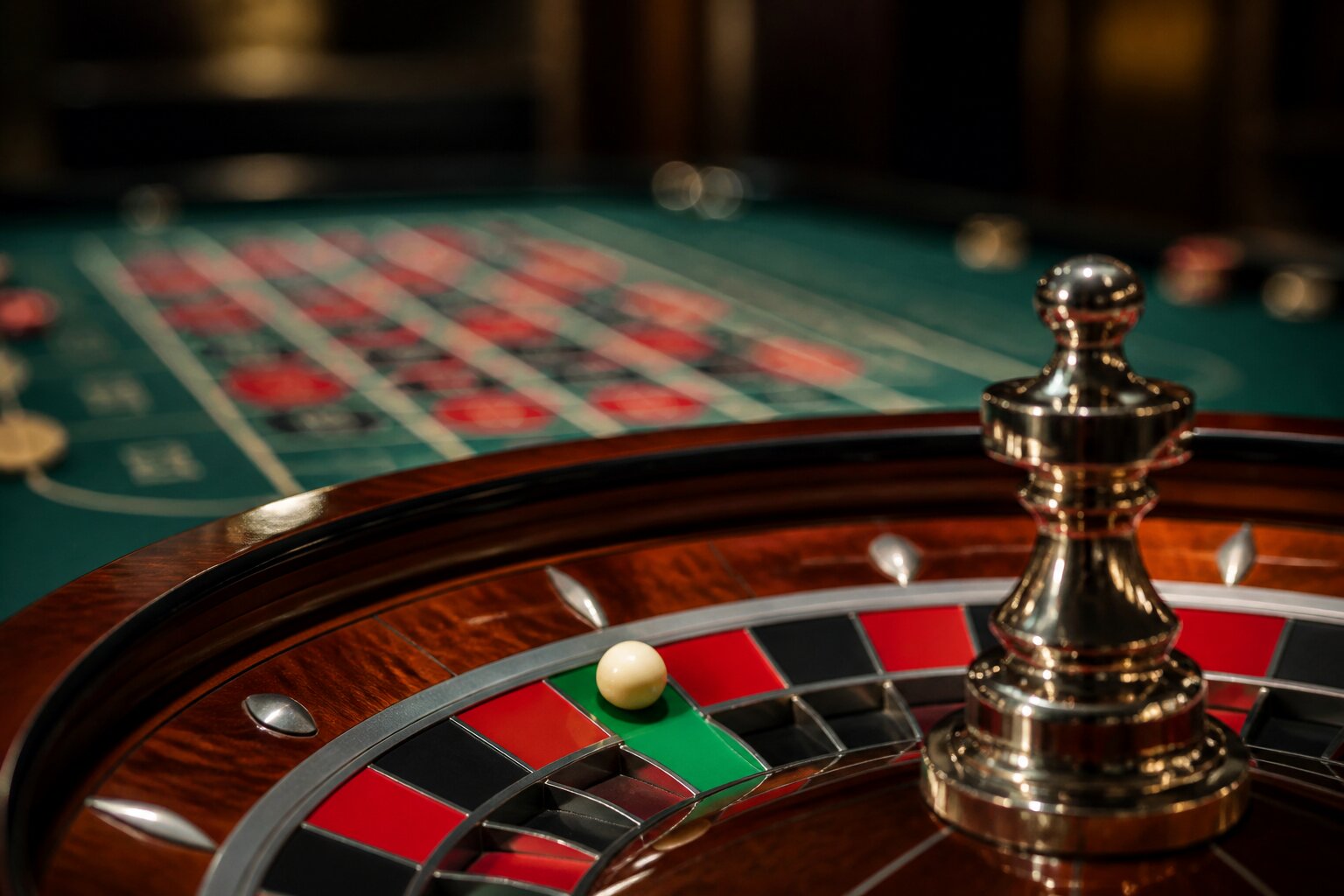
Roulette is one of the most popular games you’ll find in any casino. With its spinning wheel, clinking chips, and many betting options, it’s easy to see why it attracts so much attention.
If you’ve ever wondered whether 0 is classed as even or odd, or how it changes the way bets are resolved, this article will take you through the key points so you can play with confidence and clarity.
The Unique Role of the Zero on a Roulette Wheel
The zero holds a distinct place on the roulette wheel. It isn’t classed as even or odd, red or black, and is marked in green to set it apart from the other numbers. That distinction matters because it changes how certain bets are resolved and contributes to the house edge.
There is also a structural difference between common wheel types: European wheels have a single zero, while American wheels include both a single zero and a double zero (00). The extra zero on the American wheel increases the casino’s advantage by creating more outcomes that are not covered by even-money bets.
Knowing how zero functions helps you interpret payouts and the relative odds of different bet types, which can inform the choices you make at the table.
Why Is Zero Green in Roulette?
Zero is coloured green to make it immediately recognisable among the red and black numbers. That clear visual cue dates back to the game’s early development and was chosen so players and dealers could easily see that zero operates under different rules to the other numbers.
Because zero is visually and categorically separate, it acts as a neutral outcome for many of the common bets. That visual distinction is practical as well as traditional: it signals that the zero will affect some bets differently, a point that becomes important as you consider betting options and payouts.
How Does Zero Affect Roulette Bets and Payouts?
Zero directly influences which bets win and which lose. Even-money wagers such as red/black or even/odd do not include zero, so when the ball stops there these bets are generally settled as losses unless a table applies specific rules that alter that outcome.
Inside bets that explicitly include zero — for example a straight-up wager on the zero itself — pay at the standard odds of 35 to 1. Other inside bets that include zero as part of a combination, like a split or a basket that covers zero, will be paid according to their stated odds when zero appears.
On some European tables you may encounter rules such as La Partage or En Prison, which can soften the loss on even-money bets when zero occurs by returning half your stake or holding the bet for the next spin. Always check the table rules so you understand how zero will be treated before you place bets.
Common Myths About Zero in Roulette
A number of misconceptions surround zero and how it behaves in play. One widespread belief is that zero follows a predictable pattern or can be anticipated by certain systems. In practice, outcomes are independent from one spin to the next, so past results do not affect future ones.
Another myth is that zero is “due” if it has not appeared for some time. Each spin produces an independent result, so that idea doesn’t hold up. Similarly, no betting method can eliminate the house edge that zero introduces; systems that claim otherwise misunderstand the way odds and payouts are structured.
While exploring strategies, keep sensible limits in mind and make sure your play stays within them — that single sensible reminder is enough to support safe play without repeating the phrase throughout the article.
What Happens If the Ball Lands on Zero?
When the ball lands on zero, different types of bets are resolved in different ways, so it helps to understand the distinctions.
Even Money Bets
Wagers on red/black, even/odd, or high/low are typically settled as losses when zero comes up, because zero does not belong to any of those categories. On tables with La Partage or En Prison, these rules may reduce the impact on even-money bets.
Inside Bets
A straight-up bet on zero pays the advertised 35 to 1 if the ball lands on that pocket. Other inside bets that include zero in their coverage, such as certain splits or streets that encompass zero, are paid according to the standard odds for those bets.
Special Rules (La Partage/En Prison)
Where these rules apply, players see a different treatment of even-money bets when zero appears. La Partage typically returns half of the stake on a losing even-money bet, while En Prison can hold the bet for the next spin. These rules reduce the effective house edge for those specific wagers, so they are worth knowing about when choosing a table.
Understanding how zero is treated in each of these cases will help you anticipate outcomes and select bets that match your preferences.
Every spin will present the same set of possible outcomes, and knowing how zero interacts with the bet types on offer gives you clear information to act on. Armed with that knowledge, you can approach the table with a better sense of how outcomes are resolved and what to expect when the ball falls into the green pocket.
**The information provided in this blog is intended for educational purposes and should not be construed as betting advice or a guarantee of success. Always gamble responsibly.