
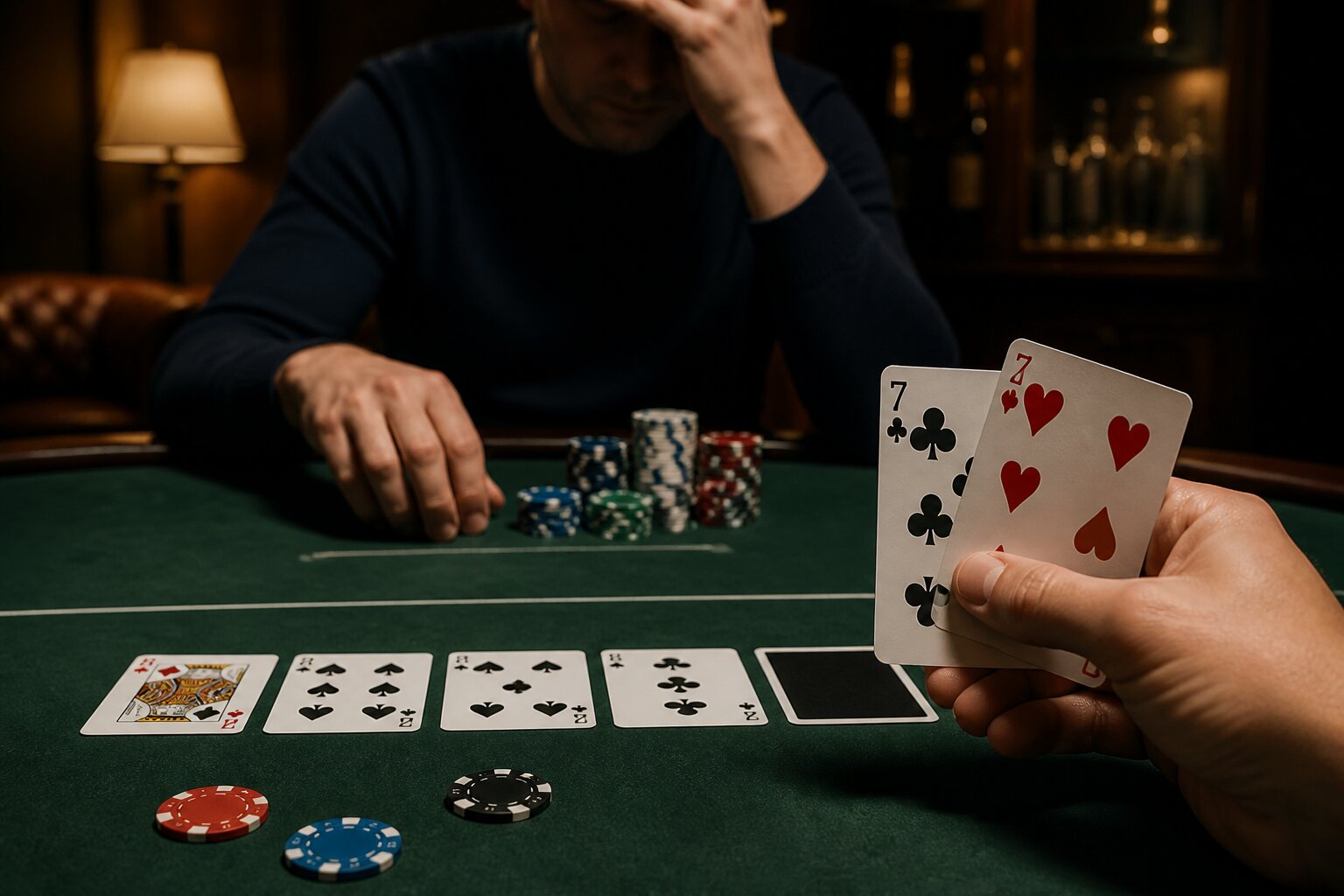
Ever found yourself hoping for that one last card to turn your hand around, only to discover there’s no way you can win? You might have been “drawing dead” and not even realised it.
Understanding what it means to be drawing dead in poker can save you chips and frustration, and it will help you make smarter decisions at the table. Keep reading to learn the meaning, why it matters, and how to spot the warning signs before it’s too late.
Whether you’re new to the game or refining your strategy, this is essential knowledge for every poker player.
What Does Drawing Dead Mean in Poker?
Drawing dead is a poker term for a situation where a player has no chance of winning a hand, regardless of which cards are still to come. Even if the cards that would normally improve a hand appear, the player’s best possible outcome will still be beaten by another player’s existing or inevitable combination.
For example, you might be one card short of your best hand, but if another player already holds a superior version of that same hand—say the highest possible flush—you cannot overtake them. Recognising this is as much about reading the board and players as it is about knowing hand rankings.
Knowing when you are drawing dead is an important part of sound decision-making at the table because it prevents you from committing more chips to a hand that cannot win.
Why Is Drawing Dead Important to Understand?
Understanding when you’re drawing dead helps protect your stack and keeps your play disciplined. It prevents chasing hands that cannot win and focuses your attention on contests where you have a real chance.
Being able to identify these moments also improves your overall game reading. It sharpens how you assess opponents’ betting patterns and combines that read with the visible cards to form a clearer picture of the likely outcomes. That edge matters over time, as folding at the right moment preserves chips for better hands.
Recognising drawing-dead situations supports responsible play by encouraging measured choices rather than impulsive calls that escalate losses.
When you’re ready to apply this knowledge in action, the next section explains what to look for at the table.
How Can You Tell If You Are Drawing Dead?
Start by putting together what you and others could plausibly hold given the community cards and the betting so far. Consider the strongest hands that the board allows and whether anyone’s actions indicate they already have one of those hands.
If it becomes clear that your best hand would still be weaker than another player’s possible or shown holding, you are drawing dead. For instance, if the board offers a flush and another player’s betting or revealed cards indicate they have the highest flush possible, any lower flush you make cannot win.
Careful observation of opponents’ behaviour—how they bet, how quickly they act, and whether their patterns earlier in the session match the current play—helps build this picture. Combine that behavioural read with the mathematics of hand combinations to judge whether any remaining cards could realistically change the outcome.
If the evidence points to being drawing dead, folding conserves resources and avoids needlessly escalating the pot.
Common Scenarios Where Players Are Drawing Dead
Drawing dead can arise in many formats of poker. Recognising the typical situations helps you avoid unnecessary losses and stay focused on hands where you can realistically compete. Combining technical card knowledge with careful observation of betting patterns and visible cards reduces costly mistakes and supports disciplined play.
Remember to manage your bankroll and play within your limits. No strategy guarantees a win, and sensible decision making includes folding when the odds and information show you are beaten.
Example 1: Texas Hold’em
Imagine you have a flush on the turn, but the community cards and the visible strength of an opponent’s play suggest they hold the ace of that suit. If their hand is the top possible flush, any lesser flush you make will lose. You are drawing dead once that higher flush is effectively in play and cannot be overtaken by the remaining cards.
Other clues that point to this situation are the opponent’s large bet sizing, previous showdowns that revealed similar holdings, or the unlikelihood of a board runout changing the relative order of flushes. In such spots, folding early prevents throwing more money away.
Example 2: Omaha
Omaha requires exactly two hole cards and three community cards, which creates many more combinations and more ways to be dominated. If the board gives you a straight but another player’s possible holdings allow them to make a full house or better by the river, your straight can be powerless against that stronger outcome.
Because players must use two hole cards, it is important to count combinations and consider how other players’ visible cards alter the range of hands they can hold. Watch for small edges that indicate a stronger made hand, such as coordinated suits or paired boards, and be prepared to concede when the maths and the action both point to you being behind.
Example 3: Seven Card Stud
In stud games, exposed cards give valuable clues about what remains in the deck and what opponents may complete. If an opponent shows several matching ranks or suits that already form a very strong set, and the remaining deck cannot improve your hand past theirs, you can be drawing dead even before the final card is dealt.
Pay attention to cards that are dead because they are showing, and use that information to reassess your chances. Good stud players adjust quickly when the visible evidence makes a comeback impossible, choosing to preserve chips rather than chase a hopeless draw.
These scenarios underline why combining card knowledge with attentive reading of opponents is crucial. Next, we will clear up some misconceptions that can lead players into trouble.
Myths About Drawing Dead in Poker
Several persistent myths can mislead players into making poor calls. Addressing these will help you keep a clear head when a hand feels dangerous.
One common belief is that a “miracle card” will always bail you out if you keep calling. In true drawing-dead situations, no possible card can produce a winning combination for you against the opponent’s likely holding. Persisting in those spots wastes money and chips.
Some think skilled players never find themselves drawing dead. The truth is everyone can face these scenarios; the difference is that better players spot them earlier and fold rather than contesting unwinnable pots. Another mistaken idea is that chasing losses in a single hand will somehow recover prior setbacks—usually that behaviour only increases losses.
Clearing up these misconceptions helps you make clearer, more disciplined choices at the table.
Transitioning from myths to practical response, the next section looks at how to act when you realise you are drawing dead.
How to Respond When You Realise You Are Drawing Dead
When it becomes apparent you are drawing dead, the most constructive response is to fold and conserve chips. Remaining calm and making the economical choice preserves your ability to play future hands where you have a real edge.
Keeping to any pre-set betting or session limits also helps; those safeguards exist to prevent emotional or impulsive decisions once a hand turns against you. After folding, review what led to the misread so you can sharpen your future reads—were there tells you missed, or was the board more dangerous than it first appeared?
Developing this habit of reflection, rather than trying to force a recovery, contributes to stronger, steadier play over time.
Frequently Asked Questions About Drawing Dead
Below are answers to some common questions players raise about drawing dead to help clarify the concept and its effects on play.
Can drawing dead happen in every poker variant?
Yes. Any game that compares hands can produce a drawing-dead situation. The specific mechanics vary by variant, but the core idea—having no possible winning outcome—applies across Texas Hold’em, Omaha, Stud, and others.
Is it always obvious when I’m drawing dead?
Not always. Some cases are plain, such as when an opponent’s visible cards or aggressive line point to an unbeatable hand. Other times you must reason through possible holdings and how remaining cards could change the picture. Practice in reading boards and opponents makes it easier to spot subtle cases.
Should I keep playing if I suspect I’m drawing dead?
Generally, no. Folding is usually the sensible option when the evidence suggests you cannot win. That preserves chips for better opportunities and aligns with responsible money management at the table.
Can a professional player avoid being drawing dead?
Professionals can and do face these situations, but they typically recognise them sooner and act to limit losses. The difference lies in discipline and experience, which help them fold in marginal or hopeless spots.
If you ever feel your gambling is getting out of control, take a break and seek support from reputable gambling help organisations. Playing within limits and maintaining perspective are the best ways to protect both your funds and your enjoyment of the game.
Drawing dead is a clear concept once you learn to combine card knowledge with attentive reading of opponents, and spotting it will make your decisions more profitable in the long run.
**The information provided in this blog is intended for educational purposes and should not be construed as betting advice or a guarantee of success. Always gamble responsibly.