
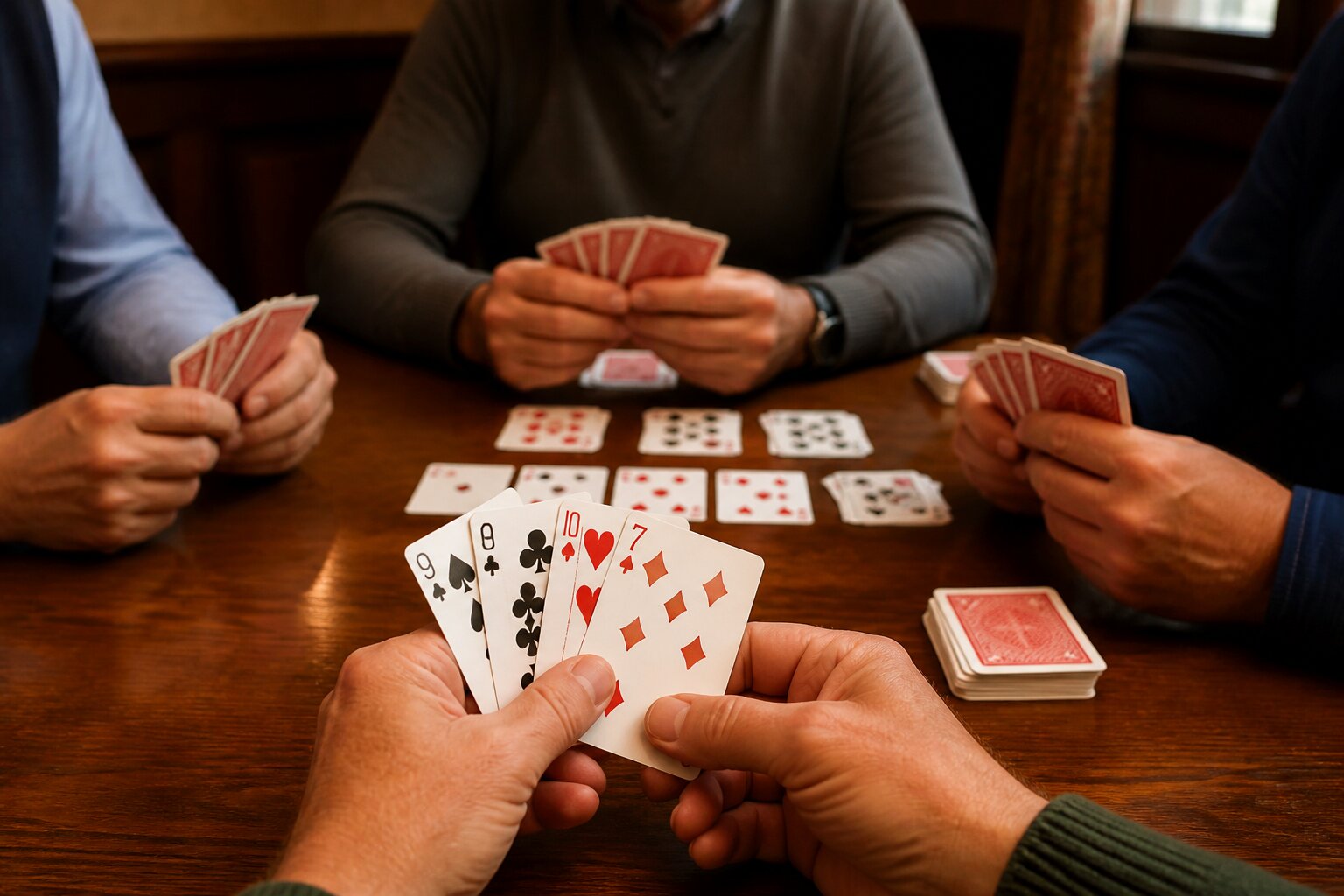
Looking for a fresh twist on classic poker? Pokerboat is an accessible card game that blends familiar poker hand rankings with a simple draw mechanic, making it easy to pick up while still offering meaningful choices at the table.
Whether you’re new to card games or already comfortable with poker basics, Pokerboat provides a social, strategic alternative for a games night. Read on to learn the setup, gameplay, common terms and helpful hosting tips so you can play with confidence.
If you plan to play with stakes, make sure everyone is 18 or over and agree limits beforehand so the evening stays enjoyable for all.
What Is the Poker Boat Card Game?
Poker Boat is a home-game variant that borrows the ranking system from traditional poker but adds a clear draw phase and straightforward betting structure. It is typically played among friends rather than in formal tournaments, and its rules are easy to adapt so groups can tune the complexity and stakes to suit their preferences.
Players use a standard 52-card deck and focus on forming the best five-card poker hand, either from the initial deal or after exchanging cards. The social nature of the game makes it well suited to casual play, while the tactical decisions around drawing and betting keep experienced players engaged.
If you enjoy poker’s hand rankings but prefer a game where each player’s hand is private and self-contained, Pokerboat has a familiar feel with its own rhythm.
Understanding the Poker Boat Card Deck & Setup
Pokerboat uses an ordinary 52-card deck with no jokers. You’ll need a flat playing surface and seating for everyone. Groups of four to eight players usually keep the game lively without stretching the deck too thin.
After shuffling, determine a dealer; many groups rotate this role clockwise after each hand to keep things fair. Deal each player the agreed number of cards, commonly five or seven, leaving any extra cards as a draw pile in the centre if the rules allow exchanging cards.
Before you start, agree house rules such as the number of cards that may be exchanged, whether betting limits apply, and how chip values are tracked. Clear ground rules avoid confusion later and help the game move smoothly.
Always confirm all participants are at least 18 if money is involved and agree sensible spending limits before play begins.
How Do You Play Pokerboat?
A typical round of Pokerboat unfolds in several phases that repeat each hand. First, the dealer gives every player their cards and play begins with an initial betting phase where players decide how much to commit to the pot. Betting can be as formal or relaxed as your group prefers, from structured limits to an entirely social, non-monetary pot.
Next comes the draw phase, when players may exchange a limited number of cards from their hand for new ones taken from the draw pile. The exact allowance for exchanges is a house-rule choice; many groups limit replacements to three cards to keep the game balanced.
Once the draw phase finishes, a second betting round occurs. Players evaluate their updated hands and choose whether to check, call, raise, or fold according to the agreed betting structure. Finally, if more than one player remains, a showdown happens and the best hand wins the pot. If players tie, the pot is split according to the agreed sharing rules.
After the hand concludes, the dealer role typically moves on and a new round begins as long as players wish to continue.
What Are the Official Poker Boat Rules?
Pokerboat keeps a straightforward framework so everyone can follow the same expectations. Players should agree these rules before play begins to ensure fairness and clarity during betting and exchanges.
Dealing and card exchange are central features. Each player receives five or seven cards, and after the first betting phase players may exchange a limited number of cards from their hand for new ones drawn from the remaining deck. Betting normally occurs in two rounds — once before the draw and once after — and choices to fold, call, raise or check follow standard poker convention.
Hand rankings used in Pokerboat are the same as in standard poker, from highest to lowest:
- Royal flush
- Straight flush
- Four of a kind
- Full boat (full house)
- Flush
- Straight
- Three of a kind
- Two pair
- One pair
- High card
When bets are settled and hands revealed, the highest-ranked hand wins the pot. Ties are resolved by splitting the pot evenly unless house rules specify another method.
Common Poker Boat Terms & Phrases
Familiarity with basic terms speeds up play and helps avoid misunderstandings at the table. Knowing these words makes rounds quicker and keeps the game friendly and fair.
Dealer
The person who shuffles and deals the cards. In many home games the dealer role rotates after each hand so everyone gets a turn, while in casinos or organised games a dedicated dealer may perform this role.
Pot
All chips or items wagered during a hand are gathered in the centre. There can also be side pots if one or more players are all in while others continue betting.
Hand
The set of cards each player receives; this may be five or seven depending on house rules. Common variants include:
- Five-card hands, used in traditional draw games
- Seven-card hands, used in games such as seven-card stud
- Community-card formats, where players combine hole cards with shared cards on the table
Draw
Exchanging unwanted cards from your hand for new ones from the draw pile. The number of cards you may draw and when you draw them depends on the specific game variant and the house rules.
Fold
Discarding your hand and ending participation in the current round, forfeiting any stake in the pot. Folding is often the best option to limit losses when your hand is unlikely to win.
Raise
Increasing the current bet, committing more to the pot. Raises must follow the betting structure being used and are subject to house limits.
Call
Matching the current highest bet to remain in the hand. Calling keeps you in contention without increasing the stake beyond the current level.
Check
Passing the action without betting, provided no one has bet in that round. Checking maintains your place in the hand while allowing the action to move on.
Showdown
Revealing remaining hands at the end of betting to determine the winner. The player with the best hand according to the agreed ranking wins the pot.
These terms describe the main actions and roles you will encounter during play and make communication at the table much clearer. Always confirm any specific house rules, stakes and limits before play starts, and remember to play within your means.
How Does Pokerboat Differ From Other Card Games?
Pokerboat stands apart from games like Texas Hold’em, Blackjack and Rummy through its structure and focus. Unlike Hold’em, Pokerboat does not use community cards; each player relies solely on their own dealt hand and any cards they exchange. The absence of shared cards keeps strategy centred on individual hand management rather than shared board reads.
Against Blackjack, Pokerboat is not a dealer-versus-players contest or a race to a numeric target. The competitive element is player-versus-player, resolved through hand rankings and wagering.
Rummy’s objective of forming runs and sets is different again; Pokerboat depends on standard poker rankings and betting, not on melding sequences.
These contrasts make Pokerboat a good choice when groups want a poker-like experience that remains self-contained and direct.
Myths About Poker Boat: What’s True & What’s Not?
There are several misconceptions about Pokerboat worth clearing up so new players know what to expect.
Myth: Pokerboat is identical to traditional poker.
Fact: It shares poker hand rankings but adds a fixed draw phase and simpler betting structure, so it plays differently from variants like Texas Hold’em or Five Card Draw.
Myth: You must stake large sums to enjoy the game.
Fact: Many groups play Pokerboat for low stakes or purely for points, and betting levels are set by the players.
Myth: Pokerboat is only about chance.
Fact: Chance influences which cards are available, but choosing whether to draw, fold or raise involves skill, observation and judgment.
Myth: Anyone can play for money.
Fact: In the UK, any play involving stakes must be restricted to people aged 18 and over and follow applicable rules. Agreeing clear limits and boundaries ensures play stays within legal and personal comfort zones.
Understanding these points helps groups set the tone and scale of their games appropriately.
Tips for Hosting a Pokerboat Game Night
A well-run evening makes the game more enjoyable for everyone. Start by preparing the essentials: a standard deck, seating so players can reach cards easily, and a simple method to track bets or chips. Good lighting and a tidy surface reduce accidental disputes and speed up play.
Set house rules at the start so everyone knows how many cards can be exchanged, the structure of betting rounds and how the dealer will rotate. These early agreements reduce interruptions and keep the focus on the game.
Encourage respectful behaviour and ensure players keep wagers within comfortable limits. If you do include money, confirm all participants are 18 or over and that everyone has agreed the stakes. Build in short breaks during a long session so energy levels stay steady.
A thoughtful host who prepares the space and clarifies rules helps the evening run smoothly and ensures Pokerboat is enjoyable for the whole group.
**The information provided in this blog is intended for educational purposes and should not be construed as betting advice or a guarantee of success. Always gamble responsibly.