
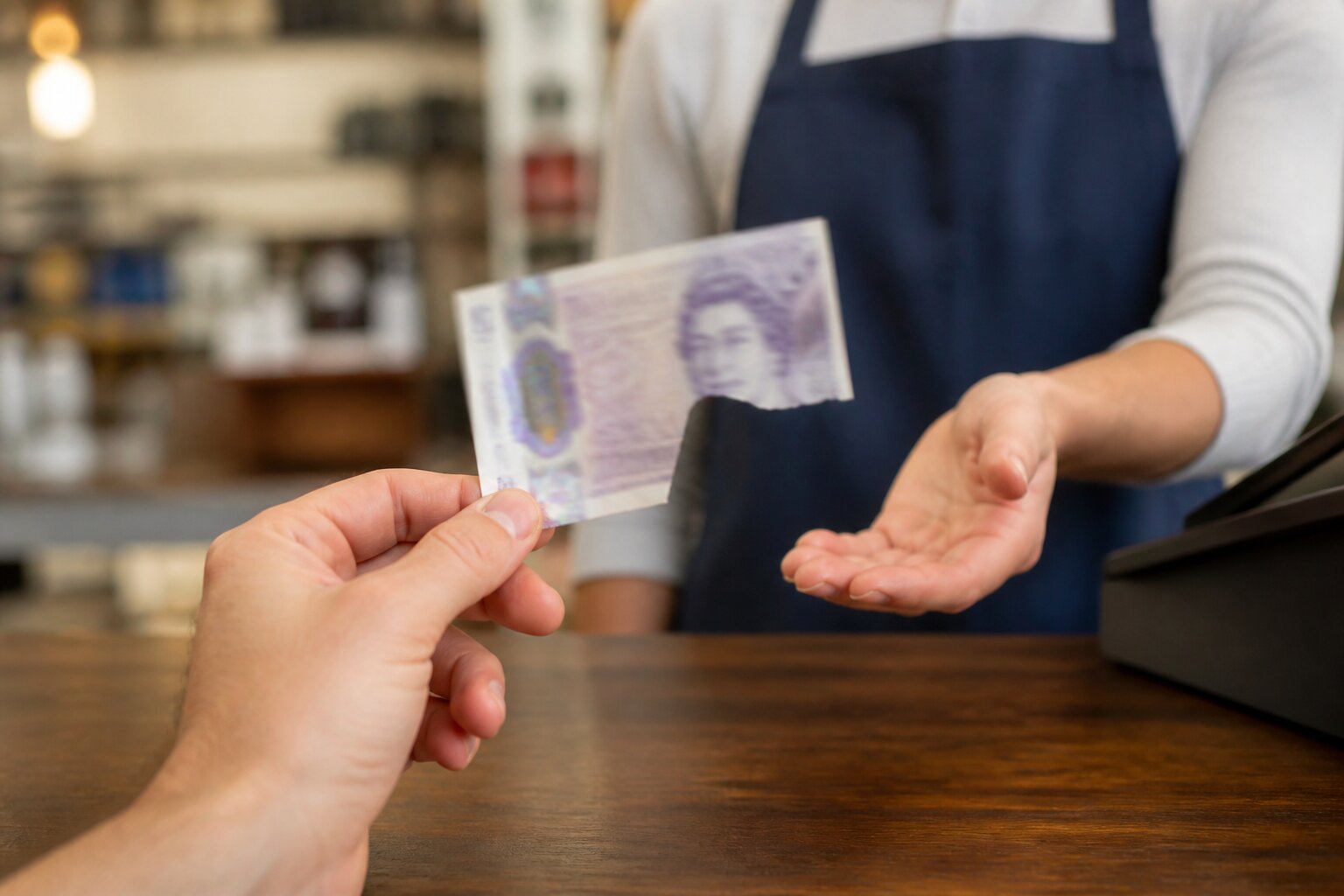
Ever found a banknote in your wallet with a rip or a tear and wondered if you can still spend it in the shops? You’re not alone. That moment at the till can be awkward, and the rules around damaged notes aren’t always clear.
This guide explains what happens when a note is damaged, how retailers typically treat torn cash, and the practical options if a shop refuses your note. Read on to learn how to handle damaged banknotes with confidence.
Can You Use Damaged Banknotes in UK Shops?
Shops can accept damaged banknotes, but they do not have to. Retailers need to be confident a note is genuine and sufficiently intact to be banked. If key security features or serial numbers are obscured, or large pieces are missing, staff are likely to refuse the note to avoid problems when depositing cash.
Decisions often come down to the individual shop’s policy and the staff member’s judgement. Larger chains usually follow tighter rules and may refuse anything that looks suspect, while smaller businesses sometimes exercise more discretion. If a shop does refuse your note, there are formal channels you can use to recover its value. The next section explains the kinds of damage that matter most to retailers.
Common Types of Banknote Damage That Matter to Shops
Retailers assess damage by considering whether they can still verify a note’s authenticity and completeness. Small issues are treated differently from severe damage, and where the tear runs or what’s missing makes a big difference. Shops also take account of how busy the till is and the training of staff, since those factors affect how much time can be spent checking a note.
Decisions are usually pragmatic: if a note can be checked quickly and appears genuine, it is more likely to be accepted. If there is any doubt about authenticity or the note looks incomplete, staff are likely to refuse it or pass it to a manager for closer inspection. The financial and reputational risk of accepting a bad note is what underpins these practices.
Minor Tears or Small Rips
Small tears, light creases and superficial marks are often tolerated. If a tear does not cut through crucial features and both halves of the note remain present and align correctly, many shops will accept it.
Staff typically need only a quick glance at the security features to proceed. If the shop uses cash-counting machines or tills with built-in detectors, these can speed up the process and give staff more confidence when accepting slightly damaged notes.
Large Tears, Missing Pieces & Heavily Marked Notes
Notes with large rips, missing sections, heavy ink marks, or obscured serial numbers are more likely to be refused. Retailers worry about counterfeit risk and the practical problem of banking such notes.
In tills where cash is processed in bulk, anything that looks incomplete or tampered with is treated cautiously. Where possible, staff will compare the note against a genuine example or seek guidance from a manager before making a decision.
How a shop responds ties back to its procedures and the environment at the till, which leads into how minor and major damage are handled in practice. Clear internal rules and staff training reduce uncertainty and help maintain consistent treatment of damaged notes.
Minor Damage
When damage is minor—small tears, slight folds or light smudging—transactions usually proceed without fuss. Staff will look for the visible security features and check that the note is whole. In busy environments, this quick check keeps queues moving while ensuring the note is acceptable.
If the tear is small but positioned near a security element, however, a cautious retailer might still refuse it. That judgement balances the need for good customer service with the practicalities of handling cash. In such cases staff will often explain the reason for refusing the note and may suggest that the customer exchange it at a bank or use another form of payment, keeping the interaction straightforward and fair.
Major Damage
Major damage, such as large sections missing, deep tears through security elements, or extensive defacement, raises immediate concerns. When the integrity of the note is so compromised that security features cannot be verified, retailers are much more likely to reject it. They do this to avoid the risk of accepting something that cannot be banked or that might later be identified as counterfeit.
Retail chains that handle high cash volumes commonly instruct staff to refuse badly damaged notes to prevent reconciliation problems at the end of the day. This is particularly important where tills and automated counting machines are used, since heavily damaged notes can jam equipment or complicate counting and banking procedures.
Independent shops and market traders may take a more flexible approach, especially in situations where staff are familiar with regular customers. However, if a note appears incomplete, looks tampered with, or has key security features missing, refusal remains a frequent outcome. Staff are often instructed to err on the side of caution.
If you find your note is refused, there are formal avenues to recover its value, which are covered later in this guide. Banks and the issuing authority have procedures for assessing and, in some cases, redeeming damaged banknotes, so refusal at the till is not necessarily the end of the road.
What Retailers & Businesses Say About Damaged Notes
Practices vary across the retail sector. Some businesses provide staff with clear guidelines on handling damaged cash, while others leave the decision to the front-line employee. Trade groups often advise retailers to be cautious, because banks might reject severely damaged notes when they’re counted or deposited.
For shoppers, this variability is the practical reality: a slightly ripped note might be accepted in one shop and refused in another. If a shop declines a note, the Bank of England and some banks can help assess and, where appropriate, replace damaged notes. The following section explains the Bank of England’s role in more detail.
Bank of England Policy on Damaged Notes
The Bank of England operates a Mutilated Notes Service to assess and, where possible, replace damaged notes. Generally, to be eligible for exchange a substantial portion of the note—often at least half—must remain and identifiable security features should be visible.
Each submission is examined for authenticity and for signs of intentional damage or tampering. When a claim is approved, the Bank pays the assessed value directly into the claimant’s bank account. This procedure provides a formal avenue when shops and banks cannot accept a note.
Knowing this option exists can remove a lot of stress if a shop refuses your cash, and explains why retailers sometimes decline heavily damaged notes rather than accept them at their own risk. If you do find yourself turned away, the next section outlines the practical steps to take.
What Should You Do If a Shop Refuses Your Ripped Note?
If a shop refuses a damaged note, it’s important to remain polite and then follow the formal routes for recovery. The Bank of England’s Mutilated Notes Service is the most reliable way to seek reimbursement for badly damaged cash. The process involves completing a claims form and sending any remaining pieces of the note for assessment.
High street banks may also exchange damaged notes for their customers, particularly when damage is minor and authenticity is straightforward to verify. It’s worth checking with your branch before posting anything. Where the Bank of England is required, follow their guidance carefully so your claim can be assessed efficiently.
Next, the article looks at how exchanges and replacements are handled in practice so you know what to expect when you use these services.
How to Exchange or Replace a Damaged Banknote
Most banks will assist customers with mildly damaged notes, assessing whether the note’s security features and serial number remain visible. If the local branch cannot accept the note, the Bank of England’s formal claim route is the fallback for more serious damage.
For larger damage that prevents immediate acceptance, prepare as much of the original note as you have, complete the claim form, and submit everything as instructed. The Bank inspects each case and, if the note is genuine and meets their criteria, arranges payment into your account. This process ensures genuine, damaged notes are not simply lost value.
Having covered how to recover a refused note, the next section offers simple ways to prevent damage in the first place.
Prevention Tips: Keeping Your Notes in Good Condition
Simple habits extend the life of banknotes. Carrying notes flat in a wallet or purse, avoiding folding and crumpling, and keeping them away from liquids and extreme heat all reduce wear. Treat polymer notes gently—while they’re more durable than paper, they can still tear or mark.
Regularly checking your cash and removing anything showing early signs of damage helps avoid last-minute problems at the till. Handling notes with clean, dry hands and avoiding writing or sticking labels on them keeps features visible and makes acceptance more likely. With a bit of care, the need to use replacement services can be minimised.
Myth: Shops Must Accept Ripped Notes
A common assumption is that every shop must accept any banknote regardless of condition. In truth, retailers are not legally obligated to accept damaged notes if they cannot be verified or banked.
Myth: All Damaged Notes Are Worthless
Another misconception is that torn notes automatically lose value. In most cases, if enough of the note remains and it is authentic, the Bank of England can replace its value through the official process.
Myth: Tape or Glue Always Fixes a Torn Note
Repairing a note with tape or glue might help in some minor cases, but excessive repairs can make a note unusable. Large or messy fixes can obscure security details, making banks and shops more cautious.
Myth: Banks Will Exchange Any Damaged Note
Banks do often help replace damaged notes, but this is assessed case by case. Where damage is extensive, the Bank of England’s procedure is the appropriate route.
Understanding these points removes a lot of uncertainty and helps you deal with damaged cash calmly and effectively. Follow the practical steps described here and you’ll be prepared whether a shop accepts a torn note or you need to seek a replacement.
**The information provided in this blog is intended for educational purposes and should not be construed as betting advice or a guarantee of success. Always gamble responsibly.