
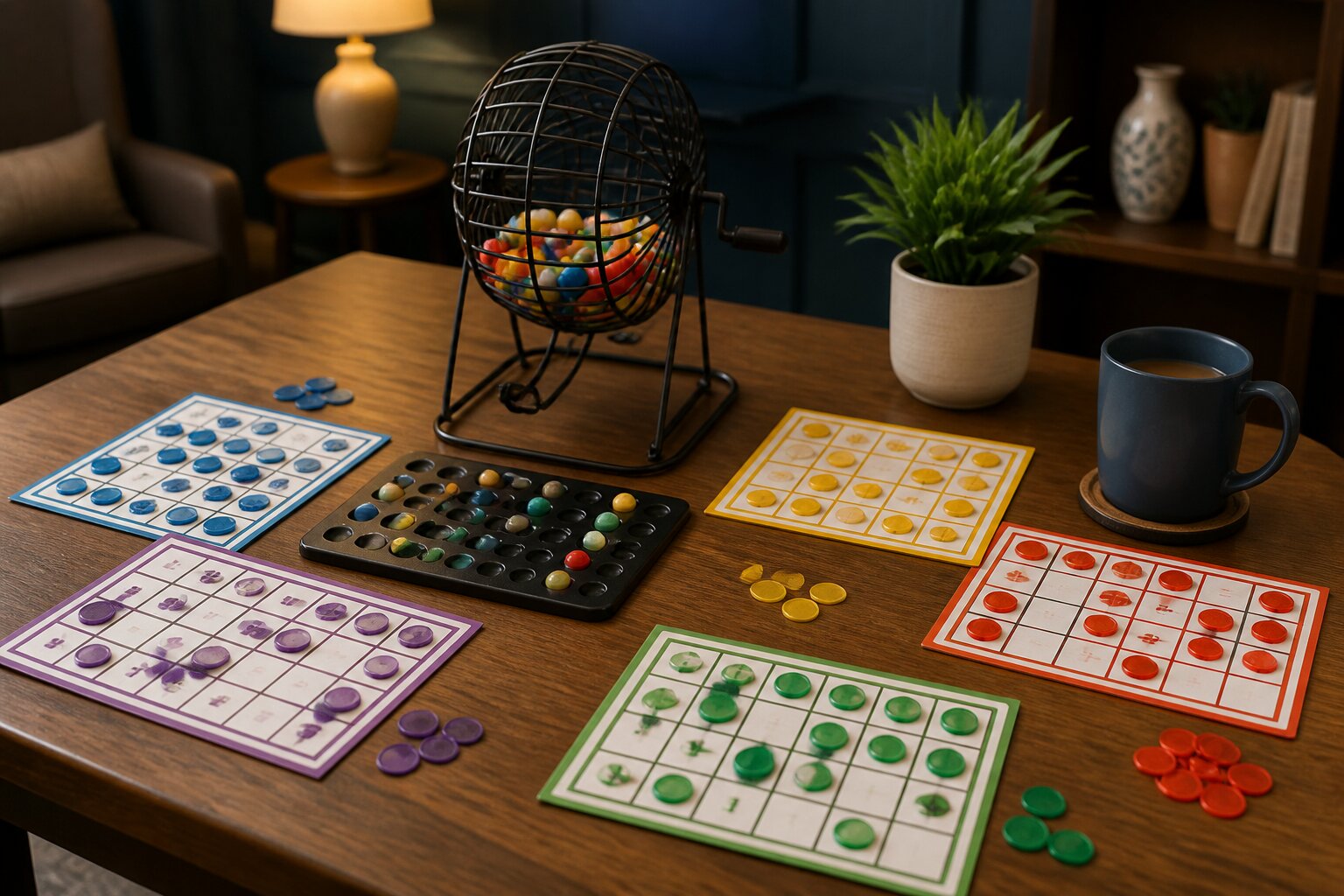
Bingo isn’t just one simple game—there are several different versions to try, each with its own twist. Whether you’re new to bingo or looking to refresh your routine, discovering these variants is a good way to keep play interesting.
From classic 90-ball to the rapid 30-ball format, each type has clear rules, distinct card layouts and different winning patterns. In this guide we’ll explain the popular variants and give straightforward examples so you can see how each one plays out.
Ready to find your new favourite? Let’s get started.
What Are the Most Popular Bingo Variants?
A handful of formats dominate play because they offer a mix of pace and patterns that suits different tastes. 90-ball is the traditional style commonly found in British halls, with three prizes per round based on one line, two lines and a full house. 75-ball uses a 5x5 grid and often focuses on completing specific shapes rather than only lines. 80-ball sits between those two in scale and tempo, using a 4x4 grid and a variety of winning patterns. On the faster end you have 30-ball speed sessions where rounds finish quickly thanks to the smaller number pool.
Each format changes how a session feels: the ticket layout affects game rhythm, the number pool affects how long rounds take, and pattern requirements shape the competition. Next we’ll look closely at the most classic of the bunch.
Classic 90-Ball Bingo Explained
Classic 90-ball bingo uses a three-row by nine-column ticket. Each card contains 15 numbers, arranged so every row has five numbers and four blank spaces. Numbers run from 1 to 90 and are allocated to columns by range (for example, the first column holds 1–9, the second 10–19 and so on).
There are three prizes in a typical round. The first prize is awarded to the first player to complete any horizontal row of five numbers. The second prize goes to the first to mark off any two complete horizontal rows on the same ticket. The top prize, the full house, is claimed when all 15 numbers on a ticket have been called.
During play, numbers are drawn at random from the 1–90 pool and announced verbally. Players mark matches on their tickets and call the win when they have completed the required line or full house. For example, a row containing 12, 26, 37, 54 and 67 becomes a one-line win once all those numbers have been drawn.
Because outcomes depend on random number draws, managing how much you spend and how long you play helps keep the experience enjoyable. If you want a different pace or pattern focus, the next section explains 75-ball bingo.
How Does 75-Ball Bingo Work?
75-ball bingo uses a 5x5 grid, with each column labelled B, I, N, G, O and covering a defined number range (for example B covers 1–15, O covers 61–75). The central square is generally a free space, already marked for every player.
What sets 75-ball apart is the emphasis on patterns. Before the round starts, the organiser shows the winning shape: it might be a straight horizontal or vertical line, a cross, an X, the four corners, or more elaborate designs. Players only win by completing the announced pattern with numbers called during the game.
Numbers are drawn at random and announced with their letter prefix, such as B-5 or O-73. For instance, if the required pattern is a horizontal line and the caller announces B-5, I-17, N-31, G-48 and O-70, a player who has those numbers across a row would claim the round. More complex patterns demand more specific placements and can make individual rounds feel quite different to one another.
This format rewards attentiveness to patterns rather than only filling rows, so the shape shown at the start of each round plays a big part in how you approach your cards. After this look at pattern-driven play, the following section outlines a mid-way option in terms of scale and speed.
80-Ball Bingo: The Intermediate Option
80-ball bingo uses a 4x4 grid with 16 numbers per ticket, drawn from 1–80. Unlike 90-ball, there are no blank spaces and unlike 75-ball the grid is smaller, which creates a brisk but not frantic tempo. Some online and in-venue games add subtle visual aids—such as different colours for each column—to make it easier to track numbers during play.
Winning patterns in 80-ball can include full rows, full columns, the four corners, or covering the entire card for a full house. Occasionally special shapes are introduced to add variety, but most sessions stick to a handful of common patterns so rounds proceed smoothly.
For example, if the winning requirement is a full column and your column shows 4, 24, 44 and 62, having those numbers called would secure the prize. The smaller grid size means you’ll see results faster than in 90-ball while still enjoying a wider range of pattern possibilities than in speed bingo. Next we’ll explore a few less common formats that offer different spins on these core ideas.
Less Common Bingo Variants You Might Find
Several variants depart from the mainstream formats to offer fresh experiences. These games often appeal to players who want a change of pace or novel ways to win.
Speed Bingo focuses on rapid rounds. The most familiar example is 30-ball bingo, played on a 3x3 grid with only 30 possible numbers. Because of the small number pool, games move quickly and the usual objective is a full house—marking all nine numbers. This allows for many rounds in a short time and suits sessions where quick turnover is desired.
Pattern Bingo applies the idea of shaped wins more widely, often using 75-ball cards. Rather than aiming for a line or full house, players chase pre-set shapes: diagonal lines, the four corners, letters such as L or T, or geometric shapes like a diamond. The variety of possible patterns keeps each game distinct.
These less common variants borrow the same principle of random draws and matching numbers, but they change the experience through card size and win conditions. If you’re curious how these layouts affect play more broadly, the next section compares card formats across variants.
How Do Bingo Cards Differ Across Variants?
Card design directly influences how a game feels and how quickly it resolves. In 90-ball the 3x9 layout with 15 numbers and blank spaces produces longer rounds and multiple prize tiers within a single game. In 75-ball the 5x5 grid with a free centre spot suits pattern-based play, where the specific shape drives the contest. The 4x4 format of 80-ball fills every square and promotes a steady pace with a limited set of patterns, while 30-ball cards are compact 3x3 grids designed for rapid full-house finishes.
These structural differences change everything from how you scan a card to how many tickets a player might reasonably handle in a single session. Smaller cards mean faster results and the possibility of joining many games; larger or sparser cards can create longer windows of anticipation as numbers are called.
Understanding these distinctions helps decide which format fits the kind of session you want—extended, social play or quick bursts of action. The next section covers how online platforms adapt these formats with technology and features.
What Makes Online Bingo Unique?
Online bingo adapts the same core mechanics to a digital environment and adds features that change how people play. Auto-daubing is a major convenience: numbers are automatically marked on a virtual card, which reduces the risk of human error and makes it easy to run multiple cards. Pre-buy options and ticket bundles let players enter games in advance or join several rooms at once without needing to be present when the game starts.
Social features such as chat rooms and hosted interactions recreate some of the social atmosphere of halls, while themed rooms and mini-games provide variety between rounds. Online rooms can also offer a wider mix of session types and allow play at any hour, so availability and choice are greater than in many physical venues.
Because play is so accessible online, it’s worth using the tools sites provide to keep control of spending and time. Features such as deposit limits, session reminders and self-exclusion options help players manage their activity and keep the experience positive.
Discover Online Slots at Freebet Casino
At Freebet Casino, we welcome you to become part of our friendly community of players who share a love for online slots and classic casino fun. We’re here to make your experience relaxing and enjoyable every time you visit our site.
Getting started couldn’t be simpler—just set up your account, make a deposit, and you’re all set to begin exploring what we have to offer. We’re always glad to see new faces join us!
We’re always glad to see new faces join us at Freebet Casino!
**The information provided in this blog is intended for educational purposes and should not be construed as betting advice or a guarantee of success. Always gamble responsibly.